
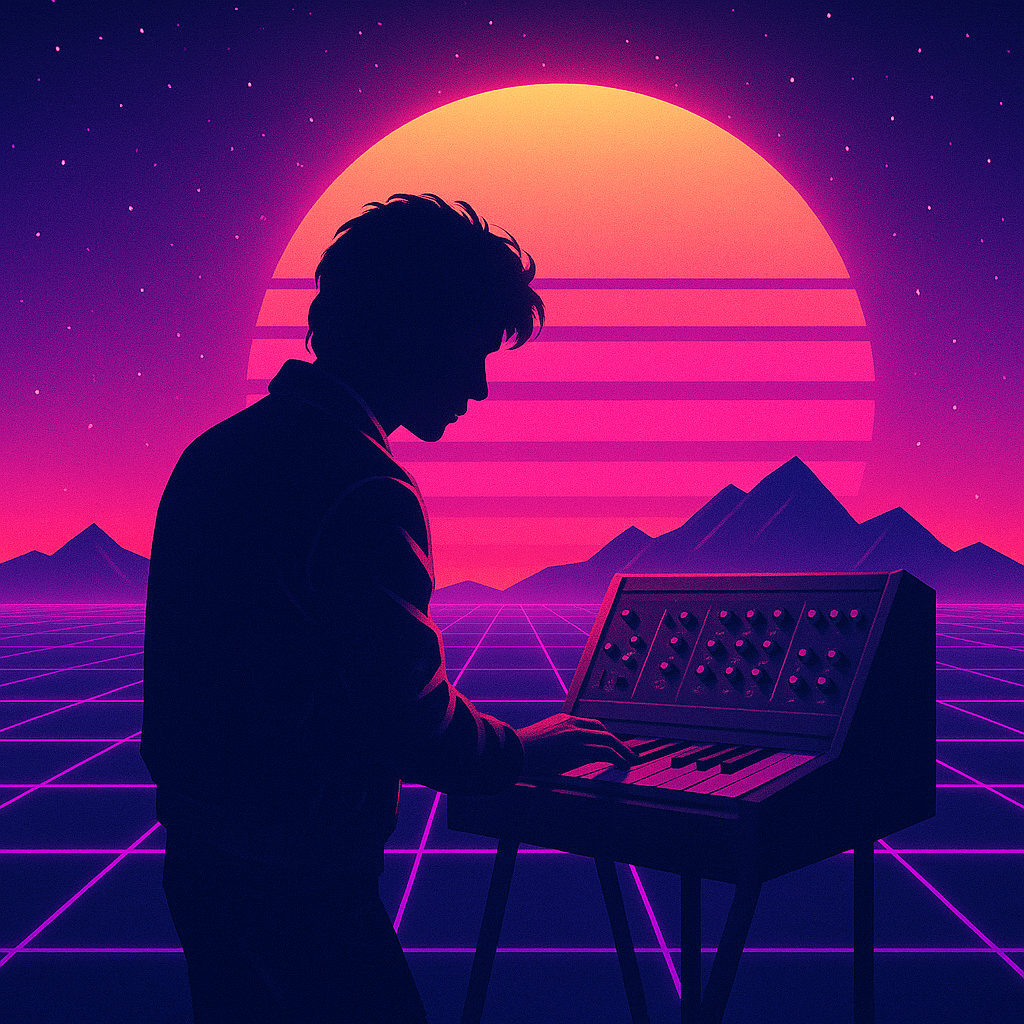
Synth-Pop Heaven: The Rise of Electronic Music in the 1980s
If the 1970s laid the foundations, then the 1980s were the glittering high-rise of electronic music. With its pulsing drum machines, shimmering synths, and futuristic flair, the ’80s ushered in a bold new era where technology met melody — and changed the sound of popular music forever. But to really appreciate the synth-pop explosion of the 80s, we need to rewind a bit… all the way back to the early sparks of electronica in the 70s.
From Kraftwerk to the Future: The Roots of Electronica
The seeds of synth-pop were planted in Germany in the early 1970s, with the robotic minimalism of Kraftwerk. Albums like Autobahn (1974) and Trans-Europe Express (1977) introduced the world to the idea that machines could make music — hypnotic, cold, and yet deeply moving. Kraftwerk’s pioneering use of drum machines, sequencers, and vocoders laid the groundwork for countless acts that followed, becoming the blueprint for both synth-pop and later techno.
Meanwhile, in the US, Giorgio Moroder was breaking new ground in the disco world. His production of Donna Summer’s I Feel Love (1977) was revolutionary — a fully synthesised disco anthem that pulsed with a mechanical heartbeat. That track, in particular, is often cited as the moment electronic dance music was truly born.
Britain’s Electro Boom: From Gary Numan to New Order
By the late 70s and early 80s, Britain had fully embraced the synthesiser. Gary Numan, frontman of Tubeway Army, exploded onto the scene with Are ‘Friends’ Electric? (1979), followed by his solo smash Cars (1980). Numan’s cold, dystopian sound and android persona set the stage for what would become the synth-pop aesthetic: futuristic, stylish, and emotionally distant.
After the tragic end of Joy Division, the surviving members regrouped as New Order and married post-punk melancholy with dancefloor-ready electronics. Tracks like Blue Monday (1983) became instant classics, combining the raw emotion of rock with the precision of sequencers and drum machines. They didn’t just shape British synth-pop — they helped define the genre globally.
Other iconic British acts like Depeche Mode, The Human League, Soft Cell, OMD, and Ultravox helped push synth-pop into the mainstream, flooding the charts with lush, layered productions. For many, this was the sound of the 80s — glossy, melodic, and unmistakably electronic.
Across the Pond: Detroit Techno and the Bellville Three
While synth-pop was lighting up European charts, something entirely different was happening in Detroit. Inspired by Kraftwerk and the futuristic ideas of afrofuturism, a group of young Black artists — Juan Atkins, Derrick May, and Kevin Saunderson (collectively known as the Belleville Three) — began crafting their own version of electronic music: techno.
Detroit techno was colder and more mechanical than house or disco, yet it throbbed with soul and innovation. Tracks like No UFOs by Atkins’ alias Model 500, and Saunderson’s work as Inner City, paved the way for techno’s global takeover in the 90s, but it was in the 80s that the foundations were set.
The House That Disco Built: The Rise of House Music
As disco began to fade from the mainstream in the early 80s (especially after the infamous “Disco Demolition Night” of 1979), it didn’t die — it evolved.
In Chicago, DJs like Frankie Knuckles (often called the “Godfather of House”) and Ron Hardy began editing disco records with drum machines and synth basslines to give them new life on the dancefloor. This new sound, dubbed house music, was raw, energetic, and built for clubs like The Warehouse — where Knuckles held residency.
At the same time, Larry Levan in New York’s Paradise Garage was spinning a more soulful, eclectic mix of disco, early electro, and proto-house — a style that would heavily influence garage and future house subgenres.
By the mid-to-late 80s, house music had jumped the Atlantic and was embraced with open arms by British ravers. Tracks like Jack Your Body by Steve “Silk” Hurley and Love Can’t Turn Around by Farley “Jackmaster” Funk broke into the UK Top 10 — setting the stage for the acid house explosion that would dominate the late 80s club scene.
The British Invasion 2.0: Synths Go Global
British artists didn’t just adopt electronic music — they exported it. The UK’s unique blend of synth-pop, post-punk, and club culture became a blueprint for artists across Europe and the US. From Pet Shop Boys and Eurythmics to Erasure and Yazoo, the UK produced an incredible wave of synth-driven chart success.
Even today, the DNA of 80s British synth-pop can be heard in modern electronica, indie pop, and dance music. The layering techniques, the melancholy mixed with melody, and the love for retro-futurism — it’s all there.
Legacy: The Lasting Impact of 80s Electronica
The 1980s weren’t just a blip on the musical radar — they were a revolution. The decade proved that machines and emotion weren’t mutually exclusive. From underground clubs in Chicago and Detroit to Top of the Pops in the UK, electronic music spread its influence far and wide.
Whether you were twirling to Depeche Mode, raving to Frankie Knuckles, or zoning out to Kraftwerk, the 80s delivered a soundtrack for both the heart and the hard drive. And in today’s music — from The Weeknd to Daft Punk and even Billie Eilish — that influence lives on.
Feeling nostalgic?
Why not build a playlist of your favourite 80s electronic tracks? Start with these:
- Blue Monday – New Order
- Just Can’t Get Enough – Depeche Mode
- Cars – Gary Numan
- Sweet Dreams – Eurythmics
- I Feel Love – Donna Summer (produced by Giorgio Moroder)
- No UFOs – Model 500
- Your Love – Frankie Knuckles & Jamie Principle
- Jack Your Body – Steve “Silk” Hurley